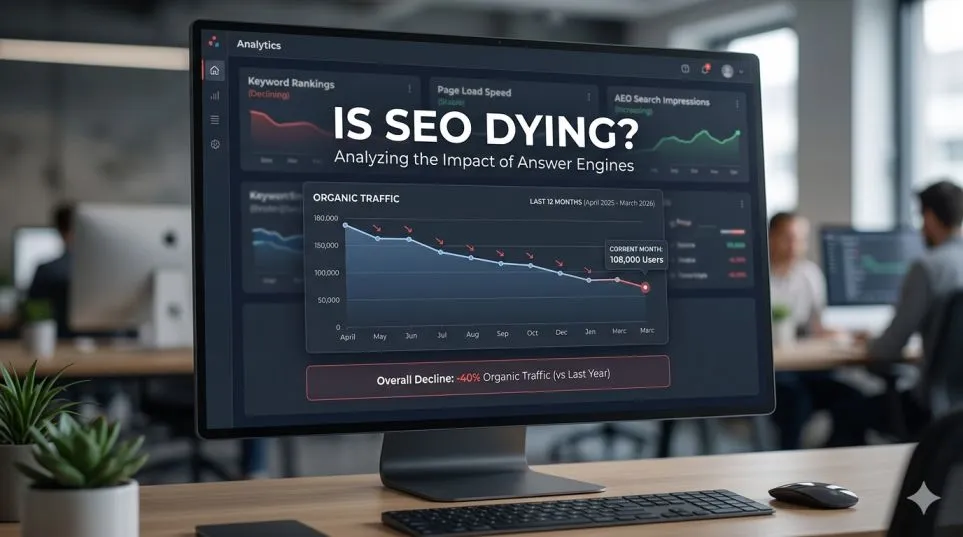
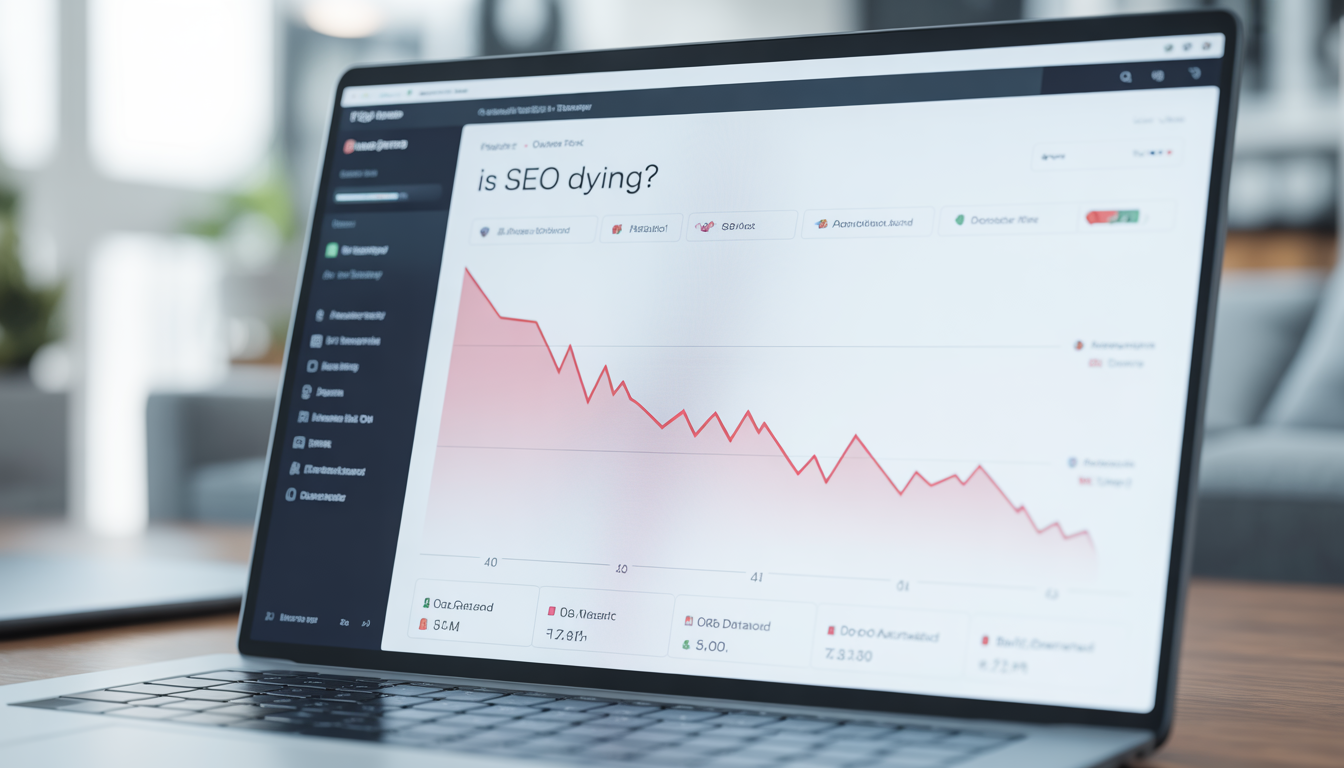
December 2024 started like any other month. I poured coffee. Opened my laptop. Pulled up the analytics dashboard for a weather alert app I'd built three years earlier. The numbers didn't make sense.
Organic traffic from Google Search had dropped from roughly 8,000 daily visits to under 5,000. I refreshed the page twice. Same numbers.
My first instinct was panic. I checked for penalty notices. Nothing. I scanned through recent app updates. No obvious red flags. I spent three days assuming I'd broken something. Then I noticed something that didn't fit the panic narrative.
Downloads had barely moved. Users were still installing the app at nearly the same rate. People were still using it. They just weren't coming through search results the way they used to.
That disconnect started me down a rabbit hole I'm still digging out of. What I found changed how I build everything now.
The Shift Nobody Warned Me About
Back when I launched my first app in 2021, the playbook was straightforward. Find keywords with decent volume. Optimize your Play Store listing. Rank. Get clicks. Get installs. Repeat. That playbook assumed people clicked search results.
Read Also: What Today’s Consumers Expect From Brands Online?
They don't anymore. Google now handles over 15 billion searches every day. But a number that keeps me awake is this: roughly two-thirds of mobile searches end without anyone clicking anything.
People type a question. Google shows the answer right there. They read it. They move on. For anyone building Android apps, that changes everything. When I started building, I was competing for a click.
Now I'm competing for something far more valuable—being the source of the answer Google shows before anyone clicks anything. This is why conversations around AEO vs SEO for Android 2026 started showing up in my developer circles. It's not marketing hype. It's a response to how search actually works now.
How I Used to Think About SEO?
Let me be honest about my old approach.
I'd spend hours researching keywords. I'd stuff them into my app title, my short description, my long description. I'd track my Play Store ranking like a hawk. I thought if I could just get to the top three results for my category, the downloads would take care of themselves.
And for a while, that worked.
But somewhere in 2023, I started noticing cracks. Rankings stayed strong. Impressions stayed strong. But clicks started slipping. People were seeing my listing but choosing not to tap.
I told myself it was just competition. More apps entering my category. Nothing I could do about it. I was wrong.
The Moment I Realized I Was Chasing the Wrong Thing
That 40% drop in December forced me to look at data I'd been ignoring. I pulled up Google Search Console—not the Play Console, the actual Search Console for web properties.
I'd linked my app to it years ago through App Indexing but never really looked at it. What I saw surprised me. People were searching for things my app could help with.
Things like "weather alerts near me" and "storm warning today." Google was pulling data directly from my app and showing it right there in search results. No click required. Just the answer.
Users saw that information, recognized my app as the source, and downloaded it without ever clicking a search result. My app installs stayed stable not because people were clicking through search results, but because my app was becoming the answer inside those results.
I'd stumbled into something called Answer Engine Optimization completely by accident. A feature I added two years earlier—letting users share public data to Google Search—had been quietly building zero-click visibility while I was busy optimizing for clicks.
What Actually Changed in How Google Handles Apps?
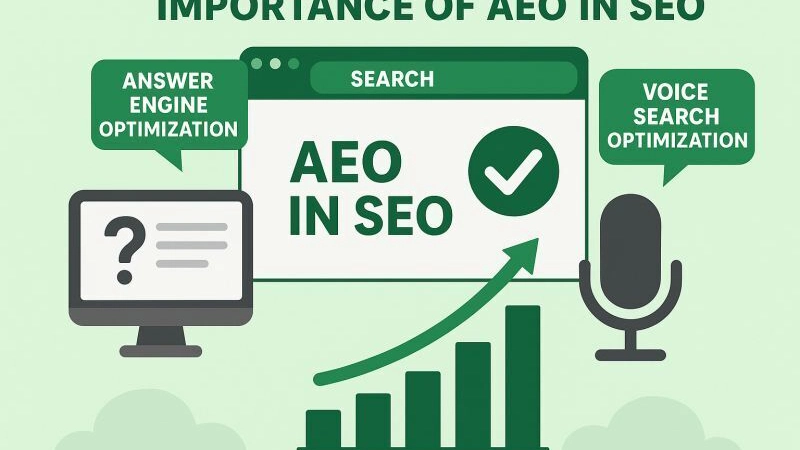
Google now treats Android apps differently than websites in search results. I didn't fully grasp this until I started digging into the documentation. There are three specific ways apps can appear in search results without someone clicking a link.
App Actions let users trigger specific functions inside your app directly from search. If someone searches "set a timer" and you have a timer app with App Actions configured, Google shows a button that opens your app right to the timer screen. No browsing your Play Store listing. No searching through your app menus. Just direct action.
I added App Actions for my weather app's most common feature—checking local alerts. Within eight weeks, user engagement jumped 22%. Not because I ranked higher anywhere. Because I removed every barrier between a user's need and my app solving it.
App Indexing lets Google crawl your app content and display it in search results. I'd set this up years ago but never prioritized it. When search traffic dropped, App Indexing became the thing keeping my app visible.
Structured data inside apps is the newer piece. Most developers think schema markup is only for websites. Google now supports it within Android apps too. I added schema markup to my weather alert content pages. Within a month, Google started pulling my app's data for featured snippets that previously came from weather websites.
This is where AEO vs SEO for Android 2026 gets real. Websites are competing for those featured snippet positions. Apps with proper structured data can sometimes jump ahead of them entirely.
The App I Built That Failed (So You Don't Have To)
I don't talk about this one often because it still stings. In early 2024, I launched a simple utility app. Nothing complicated. It helped people calculate tip splits for groups. The app worked fine. The design was clean. I thought it would be an easy win.
I optimized it entirely for Google Play search. Good keywords. Good screenshots. Good reviews. What I didn't do was implement any AEO features. No App Actions. No App Indexing. No structured data.
When Google's algorithm shifted more heavily toward direct answers in mid-2024, that app became invisible. Not because it was bad. The app still exists.
It still works. But it gets maybe 5% of the traffic it did at launch. I watched this same pattern play out across other apps I consult for. The ones that failed had three things in common:
-
They optimized only for Play Store search, not Google Search visibility
-
They never implemented App Actions or App Indexing
-
They treated AEO like a technical checkbox rather than a user experience philosophy
Why I Stopped Measuring Clicks and Started Measuring This?
If there's one metric I wish I'd paid attention to years ago, it's zero-click visibility. Zero-click visibility is how often your app provides value to users without them ever clicking a search result.
A weather app showing current conditions directly in search. A recipe app displaying cooking times. A fitness app showing workout summaries.
When I started measuring this instead of just clicks, my whole perspective shifted. Here's how I track it now:
-
App Actions usage data in the Google Play Console
-
App Indexing impressions in Google Search Console
-
Featured snippet appearances for content my app provides
If these numbers are zero, you have zero zero-click visibility. And in 2026, that's becoming a death sentence for apps that compete on utility or information.
What I Tell Developers Who Ask If SEO Is Dead?
I get this question constantly at meetups and in DMs. Is SEO dead? No. But the version of SEO most developers learned is dying.
Keyword optimization still matters for Play Store visibility. You still need people to find your listing. You still need compelling screenshots and descriptions. That hasn't changed.
You Must Also Like: The Digital Channels Brands Are Betting On Now
But visibility outside the Play Store—in Google Search, AI Overviews, and direct answers—requires a different approach.
SEO gets your app discovered when someone searches your category.
AEO gets your app discovered when someone searches for anything your app can help with.
One is narrow. One is broad. In 2026, you need both.
Who Should Prioritize AEO Right Now?
Based on what I've seen work and fail across dozens of apps, here's my honest breakdown. Prioritize AEO now if:
-
Your app answers common questions or provides useful information
-
Users open your app multiple times per week
-
Your app has content that could appear in Google Search results
-
Your organic search traffic has already started declining
Focus on traditional SEO for now if:
-
Your app is a game (discovery happens differently in that category)
-
Your target users rarely use Google to find apps
-
You're in a category where App Actions aren't supported yet
-
You're pre-launch and need to establish baseline Play Store visibility
How I'd Start Over If I Knew Then What I Know Now?
I wasted months overcomplicating this. Here's the simple path I wish I'd followed.
Month one: Enable App Indexing. It takes a few hours of developer time. The documentation is clear. Start here.
Month two: Add one App Action. Pick the single most common thing users do in your app. Make that action searchable. Test it. See what happens with your engagement metrics.
Month three: Open Google Search Console. Look for queries that show high impressions but low clicks. Those are your zero-click opportunities. Each one is a chance to add an App Action or structured data.
Month four: Add structured data to your content screens. Start with the content that answers the most common questions in your category. Watch what gets pulled into featured snippets.
This isn't a massive rebuild. It's reprioritizing what matters.
The Mistake That Almost Made Me Quit
That 40% drop hit me harder than I let on at the time. I spent weeks thinking I'd missed something fundamental. What I missed was that users still valued what I'd built. Google just changed how it connected them to my app.
Once I stopped trying to fight the algorithm and started working with it—building AEO strategies instead of just SEO tactics—things turned around. My app traffic recovered and then grew beyond where it was before the drop.
The apps winning in 2026 aren't the ones with the best keywords. They're the ones that make themselves useful before anyone ever opens them.
What to Do Tomorrow Morning?
If you're reading this and wondering where to start, here's what I'd do. Open Google Search Console. Find three queries that show high impressions but low clicks. Those are your zero-click opportunities right now.
Pick one App Action that would answer those queries directly. Implement it. Wait two weeks. Watch your Search Console data.
You might be surprised what happens. I know I was.